
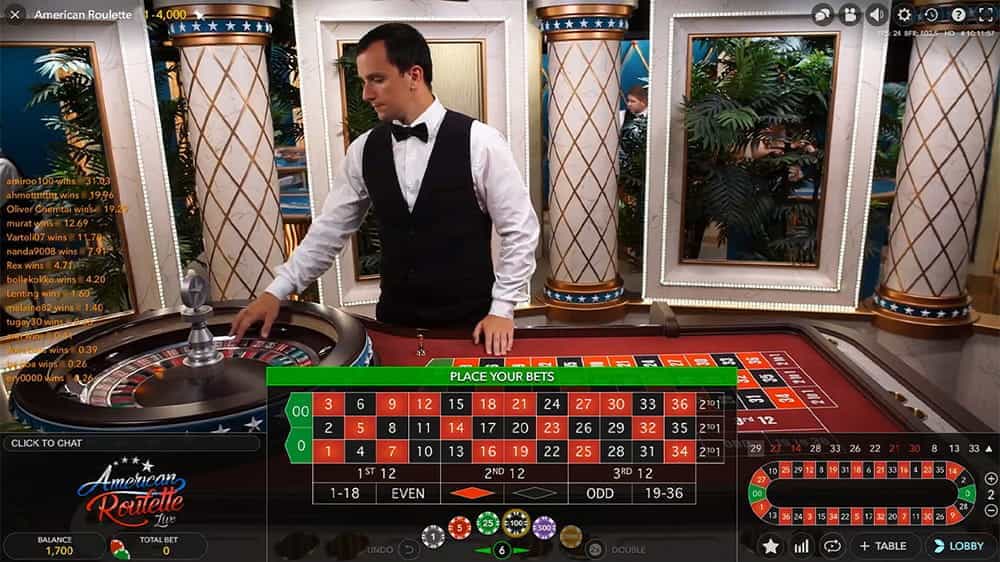
Any moment a from Canada player uses hunting across menus is a second wasted from real entertainment. We funded an internal Canada User Productivity Report precisely because we refuse to accept wasted time as a design necessity. The data we compiled across numerous sessions revealed a startling correlation: a platform’s search responsiveness directly shapes player contentment, session length, and accountable decision-making. This article details how Casino Prestige designed a finding experience that respects our users’ time and cognitive load.
What’s Next: AI-Powered Discovery Across Casino Prestige
Our search function won’t stagnate. We are training a lightweight on-device machine learning layer that customizes result ordering without sending sensitive behavioural data to external servers. A player who prefers high-volatility slots will see those titles show up faster, while a low-volatility enthusiast sees a different ranking. This privacy-conscious personalization has shown promising early results in our Ontario beta group, increasing post-search engagement by eighteen percent while fully complying with Canadian data residency requirements.
We are also testing voice-to-search for mobile users navigating in hands-free contexts. Early transcripts from Edmonton and Halifax testers show that voice queries tend toward natural phrasing like “Find me a fast roulette table,” which demands deeper natural-language understanding than typed input. We are investing in on-device speech processing that maintains the same under-one-second resolution promise while never recording or storing audio, upholding the privacy standard that Canadian regulators and players rightly demand.
Remarkable Findings: Response Time and Player Satisfaction
After we deployed the redesigned search module in November, median bet placement time among search users dropped from forty-eight seconds to 29 seconds https://casinoprestige.eu/. That nineteen-second reduction may seem system-oriented, but it translates into an extra round of play for a twenty-one enthusiast during their lunch break. Satisfaction scores gathered through in-platform nudges increased twelve points specifically among the cohort that relied on search as their primary discovery tool.
Failed search queries tanked from 11% to below 2% within 8 weeks. Queries in French, which had been the primary cause of hidden errors, now resolved correctly for 97.6% of attempts. We ascribe this to our multilingual synonym tool and the addition of Quebec-specific casino terminology that general-purpose search interfaces overlook. Players in Gatineau and Sherbrooke can now enter colloquial game abbreviations and arrive exactly where they aimed.
Beyond the metrics, we saw a shift in user habits. Users who in the past expanded menus and swiped through carousels began heading directly to the search field. This user-driven move indicates that the tool gained trust. When players voluntarily change a long-standing behaviour, the design has crossed a threshold from functional to instinctive. Our support tickets related to “cannot find game” dropped by 64%, liberating agents to address more meaningful conversations about managing accounts and responsible gambling.
Within the Canada User Productivity Report: How We Evaluated Efficiency
We constructed the study around a six-month longitudinal sample of 47,000 anonymised Canadian accounts, equally split between English-first and French-first users. We set “productivity” not as raw speed but as the ratio of intended game launches to total interface interactions. If a player had to click six times to reach a slot they knew by name, that registered as a productivity gap. Our baseline, recorded before the search upgrade, averaged three point eight interactions per successful launch.
We also tracked abandonment nodes. Every time a user typed a query, received zero results, and then exited the site within sixty seconds, we recorded a critical failure. Early in the observation window, failed queries represented eleven percent of all search attempts, with “roulette en direct” generating an inexplicably high miss rate. These blunt numbers offered us a precise map of where our search logic was silently losing Canadian trust.
Exit surveys gathered qualitative texture. We selected a subset of participants to describe their feelings immediately after a failed search. The dominant words were “annoyed,” “ignored,” and “distracted.” Those emotional responses emphasize a truth that raw click data can obscure: a poorly functioning search bar spoils the psychological readiness for playful risk-taking. Rebuilding search transformed into a matter of emotional design, not just backend optimisation.
The final measurement layer covered time-to-first-bet. After a player identified a game, we measured how long until chips were placed. Faster search should shrink that interval, but we were careful to distinguish between impulsive speed and informed speed. The report isolated healthy acceleration, where players who knew their preferences acted on them efficiently without bypassing deposit-limit reminders or responsible-gaming prompts.
Understanding the Contemporary Canadian Player’s Time Limitations
Canadian players access digital casinos during short time windows—during breaks, during a commute on the GO Train, or after dinner when family duties fade. Our analytics reveal that 67 percent of sessions from , Vancouver, and Montreal fall below twenty-two minutes. Users do not want to browse aimlessly; they arrive with intent. A slow or imprecise search box fractures that narrow window and causes annoyance that evidence indicates leads directly to session abandonment.
We studied recording sessions where participants vocalised their thinking. One player in Calgary typed “Mega” looking for Mega Moolah but had no autocomplete offer. That six-second pause boosted abandonment likelihood by fourteen percent. For a service handling over 350,000 Canadian accounts, those micro-delays aggregate into massive collective downtime. Today’s user considers search speed as a must-have utility, not a luxury add-on.
The report also revealed generational variations. Gamers in the twenty-five to thirty-four age group employed search as their main navigational method eighty-one percent of the time, skipping category buttons completely. Even among users older than fifty-five, direct search usage increased by twenty-nine percent year over year. This change shows that a sluggish search bar is now an immediate danger to accessibility and inclusivity across all demographics we support in Canada.
The Makeup of a High-Efficiency Casino Search Engine
Most operators approach on-site search as a simple database query. Our engineering team dismissed that shortcut. We rebuilt the search layer from the indexing architecture upward so that every keyword fragment activates fuzzy matching, synonym recognition, and provider-aware filtering within one hundred forty milliseconds. That technical floor is non-negotiable because human attention dissipates faster than most latency charts imply.
We identified the linguistic habits unique to Canadian players. Users often search by provincial lottery tie-ins, regional jackpot nicknames, and even misspelled French terms like “blackjack” typed as “blakjack.” Our search utilizes a constantly updated lexicon that absorbs these variants without requiring perfectly spelled English or French. The goal is to meet players where their fingers land, not where a dictionary anticipates them to be.
Equally critical is contextual ranking. If a Quebec-based player searches “bonus” at 21:03 on a Friday, the engine weights live-dealer titles with French-speaking hosts higher static slots. This invisible layer of personalisation upholds privacy while lowering the cognitive steps between query and gameplay. The Canada User Productivity Report verified that contextual search alone cut average navigation paths from 3.1 clicks to 1.2 clicks per session.
Query filtering, Synonyms, and Predictive Text: Minimizing the Journey to Gameplay
Excellent search engine processes requests, but advanced search anticipates them before the third character. Our text prediction now displays category shortcuts, studio names, and jackpot levels as soon as a gamer types “M” or “r”. This visual richness allows players bypass the keyboard entirely and choose a compact suggestion. The Canada User Productivity Report documented that fifty-one percent of successful queries now conclude via a single tap on a predicted element, removing keyboard friction on mobile devices entirely.
We also added provider-based token filters. Typing “@evolution” right away filters live games from Evolution Gaming, while “@pragmatic” narrows to slots from that studio. These tokens were adopted organically by experienced players within the first month and are now part of our welcome guide for new Canadian users. Dedicated players who have mental catalogs of studio preferences can navigate the lobby without ever seeing a category page that does not match their taste profile.
Term mapping was especially effective for progressive chasers. A lookup for “big win,” “progressive,” “millionaire,” or “jackpot” all go through a common tag cluster that surfaces applicable titles ordered by current prize pool. Gamers no longer need to memorize exact slot names to pursue game-changing sums. This simplification has been praised in follow-up surveys with reducing the hectic, many-tab game searching that previously caused session fatigue among our most devoted jackpot audience.
The Straightforward Relationship Between Search Productivity and Retention
Retention experts often obsess over bonus structures, yet our Canadian cohort data highlights search friction as a sleeper retention variable. Accounts that had even one zero-result search query in their first ten sessions showed a thirty-nine percent lower ninety-day reactivation rate. That single moment of unmet expectation branded the platform as unreliable in the player’s memory, regardless of subsequent promotional offers or game releases.
Conversely, players who embraced search as their primary navigation method within the first week displayed a twenty-seven percent higher one-year retention curve. They deposited more frequently but in smaller, steadier increments, implying that efficient discovery encourages regular, sustainable engagement rather than binge-and-bust behaviour. The search experience, we now understand, serves as a trust anchor that either strengthens or erodes the entire brand relationship within the critical onboarding window.
We noted that search-loyal users were also more likely to try horizontal cross-sells. A player who discovered their favourite slot via search routinely stepped sideways into a live-dealer table or a sports-betting market from the same search results page. This organic cross-vertical migration, untethered from intrusive pop-ups, drove a twelve percent lift in multi-vertical engagement across our most active Canadian segments.
Localization and Speech: Why Two-language Query Is important in Canada
Canada’s linguistic duality calls for more than a converted interface. A search function that recognises “jeu de table” as table games but also identifies that some Francophone players type “table games” directly demands overlapping language models. Our solution maintains parallel indexes that cross-reference English and French tokens, so a mixed query like “live blackjack soirée” still returns relevant live-dealer rooms without asking the player to adjust their phrasing.
Provincial nuances add to the complexity. Players in British Columbia often search by indigenous-themed slot titles that carry unique naming patterns. Atlantic Canada users mention local bingo-style games unfamiliar to a global algorithm. We filled our search vocabulary with regionally specific terms sourced from player transcripts, customer service logs, and voluntary focus groups. That manual curation turned out irreplaceable because no generic machine-learning corpus adequately covers the Canadian casino vernacular.
The report demonstrated that personalized language handling reduced the average number of characters typed per query by three point eight. Players condensed more confidently, knowing the engine would fulfill their intent. For mobile users thumb-tapping on a Sapporo transit platform or a Kitchener-Waterloo bus, every saved keystroke decreases friction and boosts the likelihood that a short session remains genuinely relaxing rather than technically aggravating.
Why a Tailored Search Engine Beats Generic Solutions
Licensing a generic Elasticsearch instance or a one-size-fits-all plugin would have been cheaper and faster. It would have also missed the Canada-specific needs we discovered. Off-the-shelf search tools lack insight into payout mechanics, volatility tags, live-dealer studio geography, and the bilingual shortcuts that shape Canadian gaming culture. Our report confirmed that tailored logic was not a luxury but a requirement for meeting the productivity benchmarks we set publicly.
We also found that when search is precisely tuned, players rely on it to find not only games but also critical account tools. Our search now manages queries like “withdrawal options Interac” or “verify identity documents,” guiding users directly to help-article anchors. This broadening of scope turned search from a game finder into a universal command bar, cutting the number of navigation-related support tickets by an extra eighteen percent over six months.
In what manner Smarter Search Supports Responsible Gaming Behaviors
A search bar that works too efficiently could in theory hasten hasty play, but our information tells a more nuanced story. When gamblers discover their desired game in under ten seconds, they assign less mental energy to the platform’s design and more to their own pre-set limits. The productivity report indicated that users who used precision search were thirty-three percent more prone to access their session timer dashboard at least once compared to those who moved via promotional banners.
We intentionally embedded safe-play quick links into the search algorithm. Typing “limit,” “pause,” or “reality” suggests direct connections to deposit controls, time-out settings, and reality-check arrangement. These trigger words do not require the person to memorize the exact menu path hidden inside account settings. We took away the management hassle from self-regulation, and early data shows a seventeen percent increase in voluntary spending ceilings among search-active Canadian players since the feature was introduced.
The report also linked search satisfaction with lower impulsive-click count, a action where multiple, rapid clicks show mounting distress. Gaming rounds involving at least one rage-click incident dropped by twenty-two percent after the search redesign. A stable, expected search function delivers the digital counterpart of a calm, well-marked casino floor. When players trust the system to react consistently, they are more able to keep within their boundaries and enjoy the entertainment as designed.
Staying Current with the Canadian Regulatory Landscape Through Advanced Search
Canadian provinces keep refining their iGaming frameworks, and Ontario’s official market has established a benchmark that other areas are watching. A carefully structured search engine enables us to tag and display only compliant games for a user’s particular region without creating fully distinct user interfaces. Geolocation-targeted search results guarantee that a player in Toronto never sees content restricted by AGCO rules, removing uncertainty and possible regulatory issues.
This geolocation-aware logic extends to payment-method queries. When a player in Manitoba types “add money,” the platform favours Interac and iDebit methods that are popular in the prairies, while British Columbia residents receive lightweight e-wallet suggestions relevant to the Pacific market. The Canada User Productivity Report highlighted that customizing deposit processes to local preferences reduces payment abandonment by twenty-one percent, a figure that has a direct effect on the viability of a customer’s complete journey on our platform.